One pipeline for every app you ship
Engineering teams use Expo's CICD Workflows to build, sign, and submit every brand's iOS and Android apps from a single React Native repo. Release cycles that took 6 weeks run weekly.
3M+ developers. 50K+ GitHub stars. Trusted in Production By:




Push to main. Get a TestFlight link.
Real numbers from the EAS Build infrastructure, not marketing estimates.
10–20 min iOS builds. No Mac.
iOS builds run on M4 Pro hardware in the cloud. No build machines to buy, patch, or babysit. Most builds finish in 10 to 20 minutes, and any engineer on the team can trigger one.
40–60% of pushes skip the full build.
Fingerprint detection notices when only JavaScript changed and skips the native build, shipping a repack (about 2 minutes) or an OTA update instead. Nearly half your team's pushes never wait for a full build.
1 token. All signing. Zero manual steps.
One EXPO_TOKEN replaces 10+ signing secrets scattered across your CI. Provisioning profiles, certificates, and Android keystores renew automatically, so an expired certificate never blocks a release again.
Every app ships from one repo
Build the shared core once, then configure each brand or app as a variant: logos, colors, bundle IDs, API endpoints, and feature flags, all in one repository and one CI pipeline. Fix a bug once and it lands in every app at the same time. No copy-paste maintenance and no per-app release coordinator.
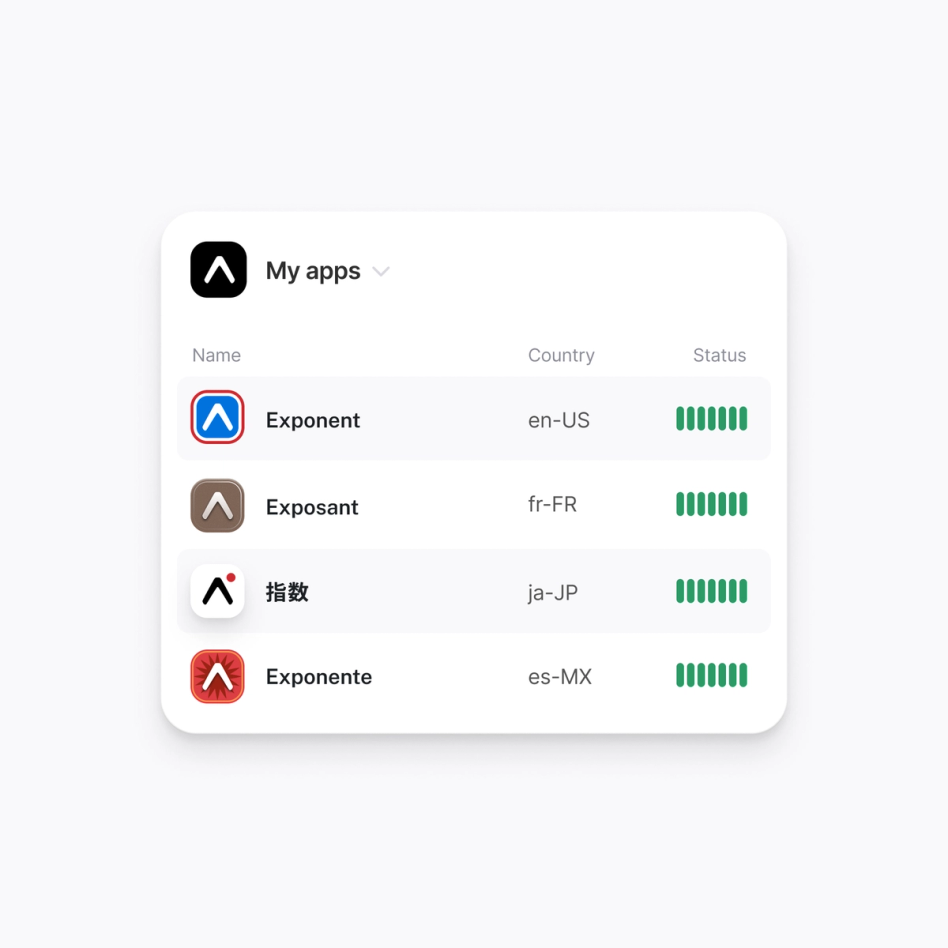
From 6 weeks to weekly
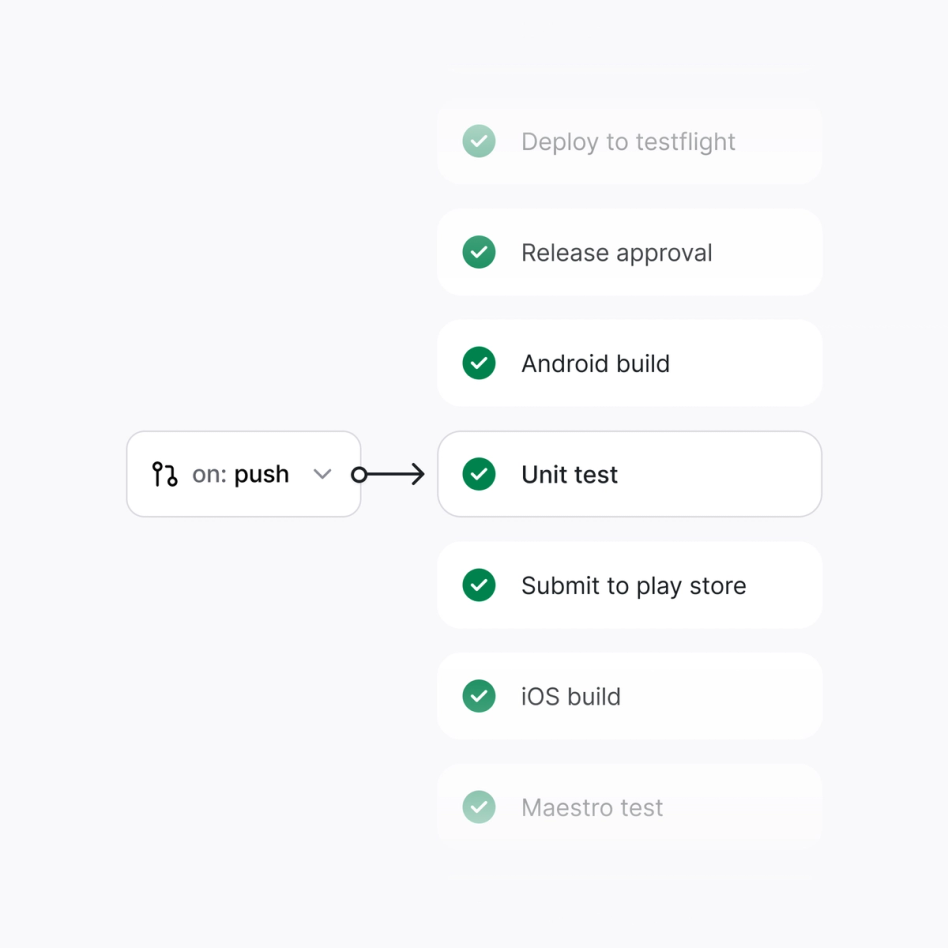
Most teams release every 4 to 6 weeks because every release needs the one engineer who understands the signing setup. EAS Workflows turns that whole path into configuration. Keep GitHub Actions for lint and unit tests; a merge to main then builds, signs, and submits both apps to TestFlight and the Play Store internal track automatically. Weekly releases become the default, not a project.
Your web team is your mobile team
Expo is React. The engineers who ship your web app can ship iOS and Android with the same language, the same components, and the same code review process. The pipeline handles Xcode, Gradle, and code signing, so nobody on the team has to become the dedicated mobile platform engineer.
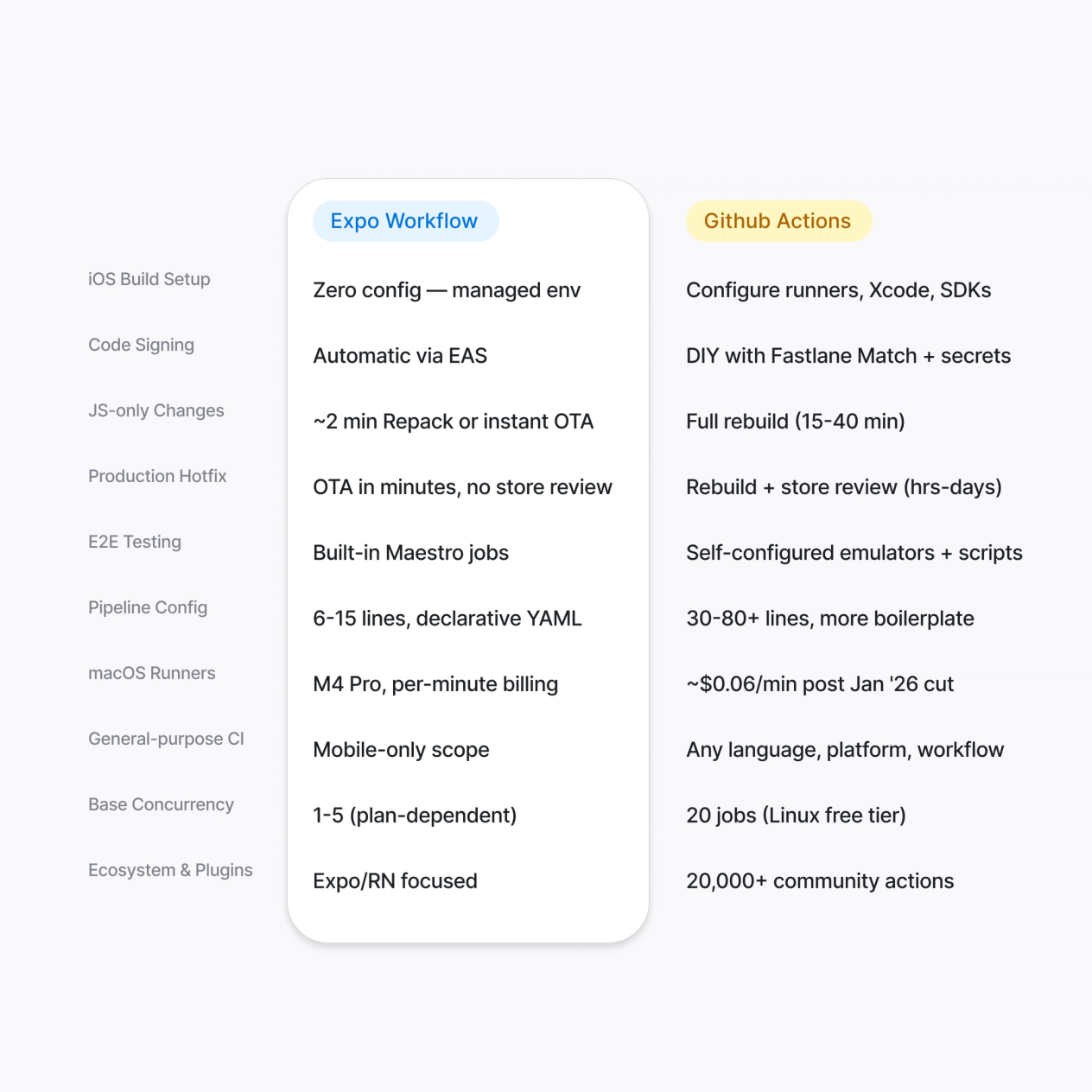
What keeps breaking your React Native CI.
Most React Native CI setups are web CI with Fastlane bolted on. The result: pipelines that break silently after every Xcode release, and a team that ships less while it debugs more.
Certificate expiration
Apple rotates distribution certificates annually. Every rotation means manual Keychain updates, re-exports, and CI secret rotation, and it usually breaks production builds at the worst moment.
Xcode version drift
The macOS runner on Bitrise or GitHub Actions updated Xcode. Your Fastlane config didn't. Builds fail, and someone spends the afternoon updating derived data paths and xcodebuild flags instead of shipping.
"Works on my machine"
Builds pass locally but fail in CI because the runner has a different Node, Ruby, or CocoaPods version. Reproducing CI failures locally takes most of the day, and it always lands on the same engineer.
Environment sprawl
Dev, staging, production, and per-brand builds need different bundle IDs, API endpoints, and signing identities. Maintaining separate Fastlane lanes and CI variables for each one doesn't scale past a handful of apps.
Enterprise-ready out of the box
Security and compliance your procurement and legal teams can approve on day one.
SOC 2 Type II
Independently audited security controls. Full report available under NDA for enterprise customers.
GDPR & CCPA compliant
Data privacy frameworks already in place. Data processing agreement available for enterprise contracts.
SSO & role-based access
SAML-based SSO and granular permissions so the right engineers have exactly the right access.
Audit logs
Exportable logs for all admin actions and full chain of custody for every build and release.
99.9% uptime SLA
Enterprise SLA with dedicated support. Because a build pipeline failure on release day isn't acceptable.
Recommended by Meta
Expo is the React Native framework recommended by Meta and a React Foundation member.
Your next release is one merge away.
Talk to the team about pipeline setup, multi-app configuration, and enterprise onboarding. Most teams run their first automated release within a week.