The only CI/CD purpose built for React Native teams.
Per-brand bundle IDs, icons, and API endpoints from one repo. Builds, code signing, submission, and OTA updates in one pipeline your whole team can run. No dedicated mobile platform engineer required.
3M+ developers. 50K+ GitHub stars. Trusted in Production By:




Push to main. Every brand builds.
Real numbers from the EAS Build infrastructure. Not marketing estimates.
10–20 min iOS builds. No Mac fleet.
iOS builds run on M4 Pro hardware in the cloud. No build machines to maintain, no queue behind another team's release. Most builds complete in 10–20 minutes.
40–60% of pushes skip the full build.
Fingerprint detection identifies when only JavaScript changed and skips the native build. A ~2 minute repack or an OTA update ships instead. Your team stops waiting on builds that didn't need to run.
1 token. All signing. Every app.
One EXPO_TOKEN replaces 10+ signing secrets across your CI environment. Certificates, provisioning profiles, and keystores renew automatically. No calendar reminders, no launch-week certificate scramble.
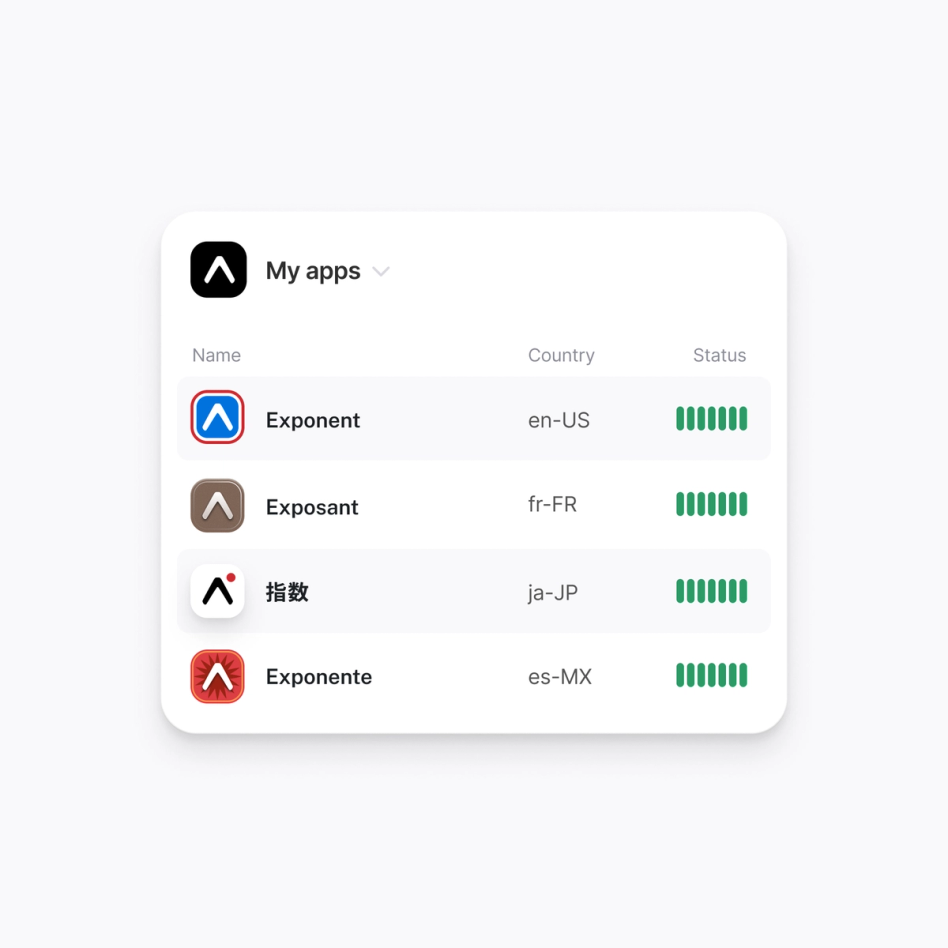
Every brand from one repo
Build the shared core once, then configure each brand as a variant: bundle IDs, app icons, brand colors, API endpoints, and feature flags. One repository, one CI pipeline, separate store listings. A bug fix lands across every app simultaneously. No copy-paste maintenance, no per-brand release coordinator.
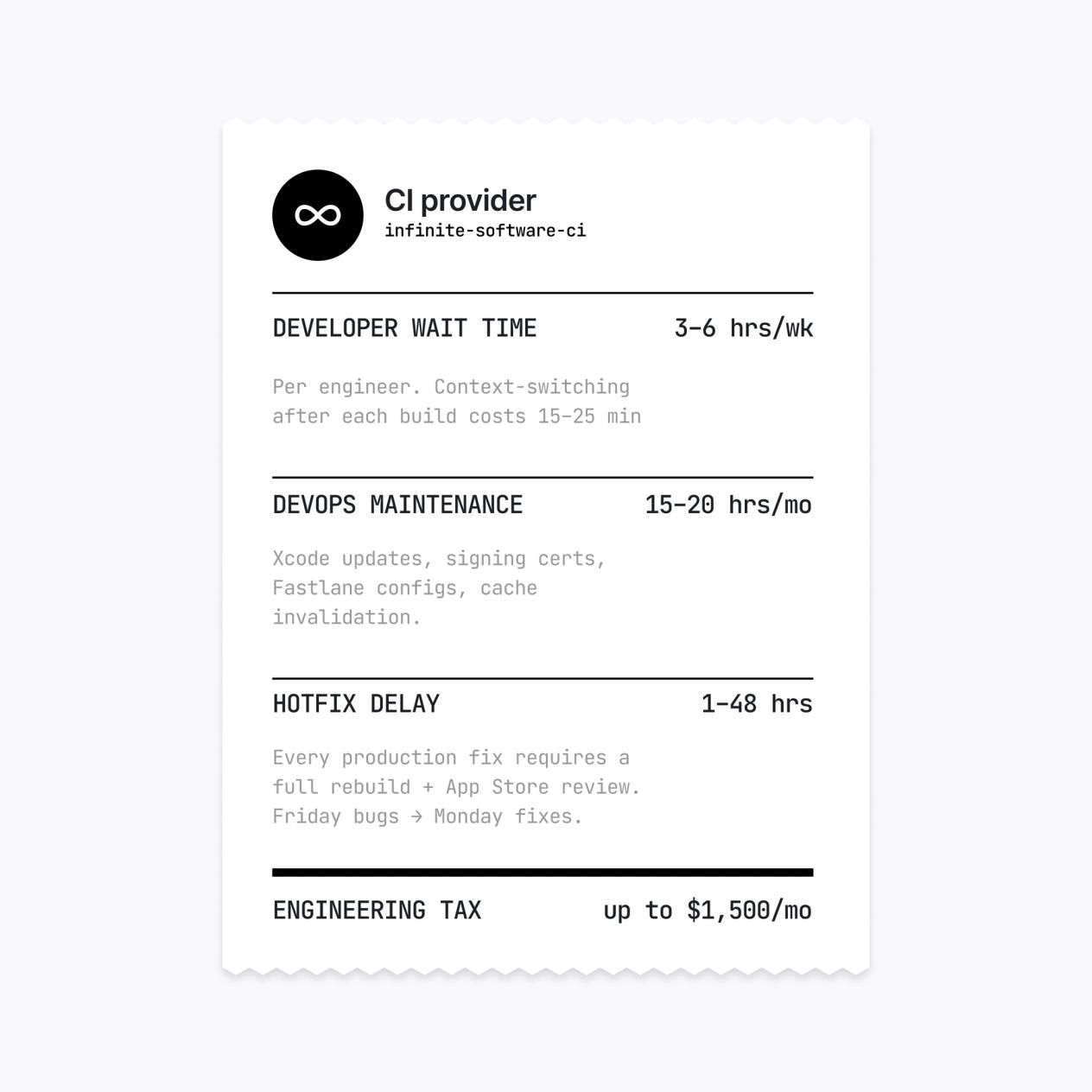
The real cost of CI
The invoice is just the beginning. Broken pipelines, manual release steps, and certificate incidents are engineering hours that never reach the roadmap. Expo cuts DevOps overhead by 80%, so your engineers ship features instead of maintaining build infrastructure.
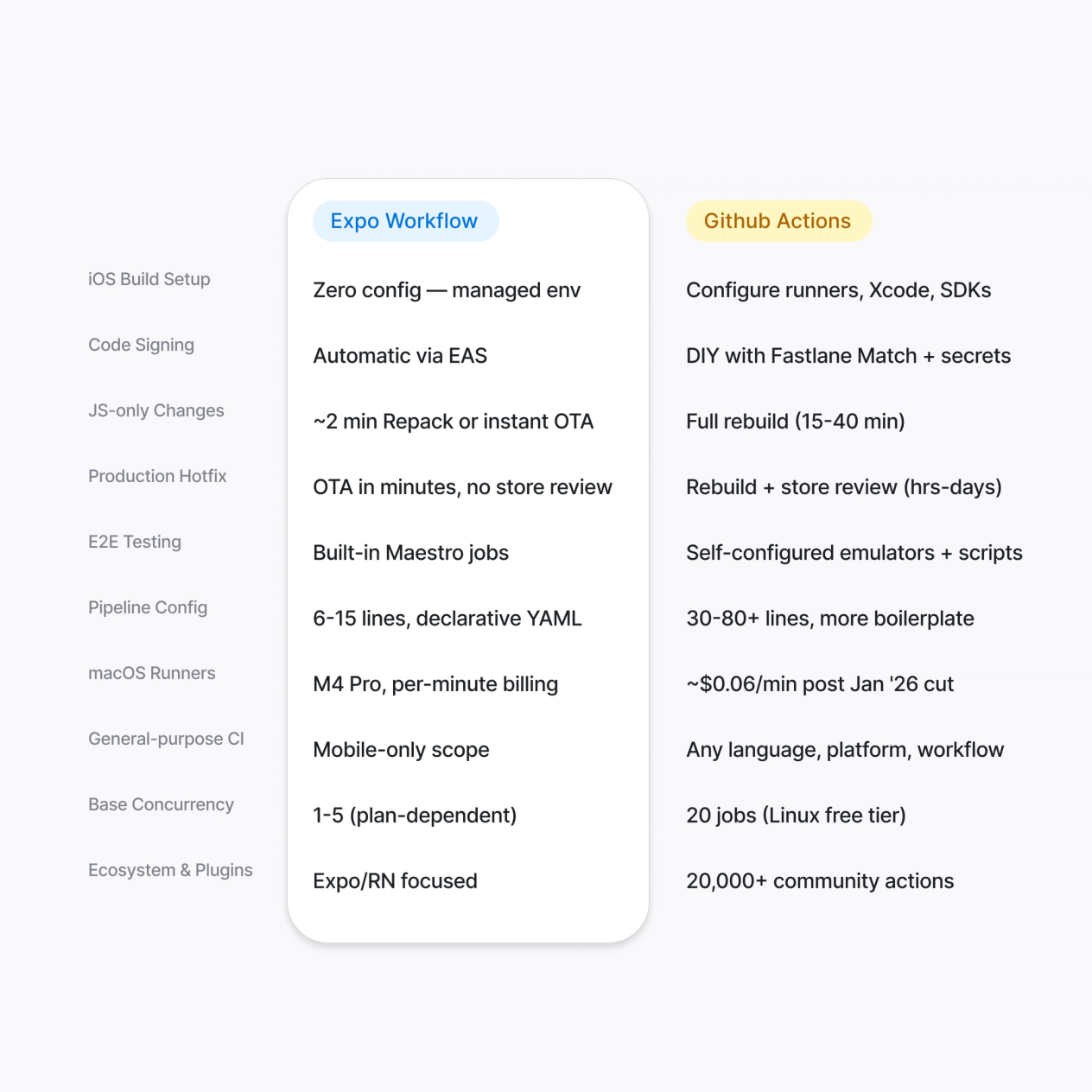
Keep GitHub Actions. Drop the Fastlane scripts.
GitHub Actions stays your CI for linting and tests. EAS Workflows handles the mobile half: iOS and Android builds, code signing, and store submission. If your team runs web CI/CD today, they can run this. Nobody maintains a Fastlane config that breaks with every Xcode release.
What keeps breaking your team's CI.
Most React Native pipelines are web CI with Fastlane bolted on. That holds up for one developer. At team scale, every seam breaks.
Certificate expiration
Apple rotates distribution certificates annually. Every rotation means manual Keychain updates, re-exports, and CI secret rotation across every app you ship. It usually fails during a release week.
Xcode version drift
The macOS runner on Bitrise or GitHub Actions updated Xcode. Your Fastlane config didn't. Builds fail, and a senior engineer spends the day on xcodebuild flags instead of the roadmap.
"Works on my machine"
Builds pass locally but fail in CI because the runner has a different Node, Ruby, or CocoaPods version. Reproducing CI failures takes most of a day, multiplied by every engineer who hits one.
Brand and environment sprawl
Every brand and environment needs its own bundle ID, icon set, API endpoint, and signing identity. Separate Fastlane lanes for each becomes a config matrix nobody on the team wants to own.
Enterprise-ready out of the box
Security and compliance your procurement and legal teams can approve on day one.
SOC 2 Type II
Independently audited security controls. Full report available under NDA for enterprise customers.
GDPR & CCPA compliant
Data privacy frameworks already in place. Data processing agreement available for enterprise contracts.
SSO & role-based access
SAML-based SSO and granular permissions so the right engineers have exactly the right access.
Audit logs
Exportable logs for all admin actions and full chain of custody for every build and release.
99.9% uptime SLA
Enterprise SLA with dedicated support. Because a build pipeline failure on release day isn't acceptable.
Recommended by Meta
Expo is the React Native framework recommended by Meta and a React Foundation member.
Ship weekly with the team you have.
Talk to the team about migrating your pipeline, multi-brand setup, and enterprise onboarding. Most teams run their first production build the same week.